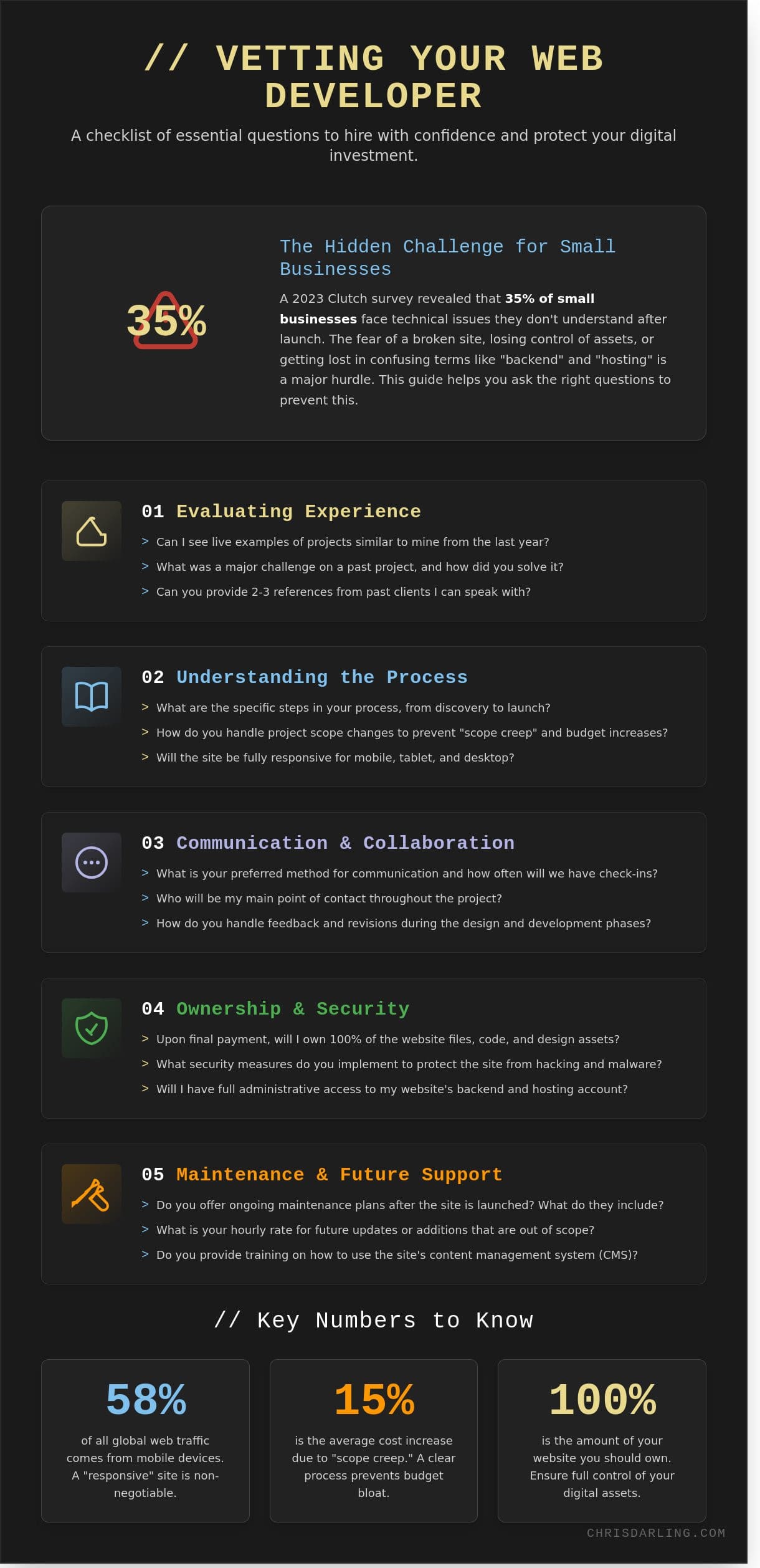
Your website serves as the primary narrative for your visual communication, yet a 2023 survey by Clutch found that 35% of small businesses struggle with technical issues they don’t understand after their site goes live. You likely want a beautiful site that functions perfectly, but the fear of paying for something that breaks or losing control of your digital assets is a heavy weight to carry. It’s common to feel overwhelmed by technical terms like “backend,” which is just the hidden machinery that makes a site run, or “hosting,” which is the digital closet where your site’s files live.
I believe that every project deserves a foundation of clarity and intellectual depth. This guide offers a complete checklist of 25 essential questions to ask a freelance web developer to help you vet partners effectively. You’ll gain the confidence to hire someone who respects your vision and ensures your site stays healthy for years. As a professional who values disciplined creativity, I, Chris Darling, am currently available for contract or remote projects where I can help translate your complex ideas into clear visual stories. Let’s look at the specific steps to protect your investment and your peace of mind.
Key Takeaways
- Learn why a beautiful portfolio is only the beginning and how to uncover the real problem-solving skills behind the designs.
- Discover the specific questions to ask a freelance web developer to create a clear roadmap that prevents expensive delays and keeps your project on schedule.
- Find out how to set healthy boundaries for communication so you and your developer are always on the same page without the confusing “tech-speak.”
- Understand how to protect your website’s security and ensure you truly own every part of your digital home once the work is finished.
- See why a website needs regular care to stay healthy and how Chris Darling can partner with you on a contract basis to keep your vision running smoothly.
Evaluating Experience: Questions to Ask About Their Past Work
Choosing the right person for your project starts with looking at what they’ve already built. You aren’t just looking for a gallery of pretty pictures. A portfolio should show how a developer thinks and solves problems. When you prepare your list of questions to ask a freelance web developer, focus on the “why” behind their design choices. It’s about understanding the web development process and how they handle the technical steps needed to bring a site to life.
To better understand how to vet your next partner, watch this helpful video:
A simple screenshot doesn’t tell the whole story. You need to know if they solved real issues, like making a site load faster or helping customers find a “buy” button more easily. Ask about their experience with WordPress. Think of WordPress as the engine under the hood that makes the website run. Since a huge portion of the web uses this tool, you want someone who knows how to keep it safe and running smoothly without making it too complicated for you to use later.
Have you worked on projects similar to mine?
Every industry has its own set of rules and hurdles. A developer who has built sites for illustrators or educators will already know the challenges you face. Listen for specific stories about how they organized large image galleries or made sure a site worked perfectly on every smartphone. Don’t just look at a PDF. Ask to click through a live site they finished in the last year. This proves their work stays functional long after the launch date.
Can you provide references from current or past clients?
Reliability is just as vital as coding skill. You want to hire someone who communicates clearly and doesn’t vanish once the work is done. Professional transparency is a sign of a great partner. For example, looking at Chris Darling’s resume reveals a steady history of professional growth and academic commitment. This kind of background shows she values long-term quality. A person with strong references proves they’ve built a reputation for staying helpful even after the final check clears.
Understanding the Process: How the Work Actually Gets Done
A project without a clear roadmap often leads to a 15% increase in total costs due to what professionals call “scope creep.” This happens when the goals shift or expand halfway through the build. You should treat the development process like building a house; you wouldn’t start pouring concrete without a blueprint. One of the most vital questions to ask your web developer is how they manage this timeline to prevent budget bloat. There is also a big difference between “building” a site and “designing” an experience. Building is the technical part, like the engine in a car. Designing is the way the seats feel and how easy it is to reach the radio. You need both to succeed.
What are the specific steps in your development process?
A professional follows a structured path to ensure quality. First, they start with research and discovery. This is where they learn about your business goals and your audience. Second, they create design mockups. Think of these as the visual blueprint of how the site looks. Third is the actual development, where the code is written to make the site live. Finally, they move to testing and launch. During this phase, they check every button and link to ensure 100% functionality before the public sees it. If you need someone who follows this disciplined approach, Chris Darling is available for contract design services for those looking to build something meaningful.
Will the site be “mobile-friendly” or responsive?
As of 2024, about 58% of all global web traffic comes from mobile devices. If your site doesn’t work on a phone, you’re losing more than half of your potential visitors. You want a “responsive” site. This means the layout changes shape to fit perfectly on any screen, just like water filling a glass. It stays useful whether it’s in a tall glass or a wide bowl. Listen for a “mobile-first” approach. This means the developer thinks about the phone user first, then the desktop user. These are the types of questions to ask a freelance web developer to ensure your brand remains accessible to everyone.
You must also clarify who handles the “assets.” Assets are the words and pictures on the page. Most developers expect you to provide the text and high-resolution images. If you don’t have these ready by the start date, it can stall the project for weeks. Knowing who handles what prevents confusion and keeps the work moving forward without delays.
Communication and Collaboration: Setting Expectations
Clear communication is the foundation of any successful digital project. You don’t want a developer who hides behind complex technical terms. If they mention “back-end architecture,” they should be able to explain it’s simply the behind-the-scenes engine that makes the site run. Chris Darling brings an academic’s clarity to her work; she’s a professional available for remote contract work who treats every client like a partner. She believes that a project succeeds only when everyone understands the “why” behind a design choice.
Be wary of anyone who promises a complex, custom site in 48 hours. A 2023 industry survey found that 35% of web projects fail due to poor communication and unrealistic deadlines. It’s better to hear that a specific feature will take ten days than to get a fake promise of three days that ends in a stressful delay. One of the most essential questions to ask involves how they handle “scope creep.” This is a common situation where a project grows bigger and more expensive than originally planned. You need a clear, written process for adding new ideas without breaking your budget.
How and how often will we communicate?
You shouldn’t have to hunt for updates or wonder what is happening with your investment. Ask for a specific schedule. Will they email every Friday afternoon? Do they prefer video calls or a shared project board? Knowing the rhythm of the work prevents anxiety. These are the vital questions to ask a freelance web developer during your first interview. Chris stays accessible and ensures her clients are never left wondering about the status of their project.
What do you need from me before we start?
A project often stalls because the developer is waiting on the client. They’ll usually need your logo files, written text for your pages, and access to your “hosting.” You can think of hosting as the digital plot of land where your website’s house sits. Providing these assets early keeps the momentum high and prevents the launch date from slipping.
Ownership and Security: Protecting Your Digital Investment
Building a website is a significant commitment of time and resources. When you are finalizing your list of questions to ask a freelance web developer, you must prioritize the long term safety and legal standing of your site. You aren’t just buying a collection of images and text; you are investing in a digital asset that should grow with your business for years to come.
Who will own the website, the domain, and the code?
The only acceptable answer is that you own everything. Your domain is your web address, like yourname.com. Think of it as the deed to your land. If the developer puts the domain or the hosting account under their own name, they effectively own your digital house. This is a massive red flag. You should always have the master logins for your hosting and domain registrar. If a developer insists on keeping these “for simplicity,” they are creating a bottleneck that could hurt you if they ever become unavailable. You want a partner who builds your platform, not someone who holds it hostage.
What is your strategy for SEO and security?
Security is not optional. Forbes reported in 2023 that roughly 30,000 websites are hacked every single day. A professional developer will explain how they put a strong lock on your digital front door. This involves using reputable hosting and keeping “plugins” updated. Think of plugins as small apps that add features to your site. If they aren’t managed, they become holes in your security fence.
SEO, or Search Engine Optimization, is simply the process of making sure Google can find your site easily. It is like putting up clear road signs so customers don’t get lost. A good developer ensures the code is clean and fast, which helps your ranking. You can see how Chris Darling approaches site security through her dedicated maintenance and professional oversight. She is currently available for remote contract work to help businesses build secure, findable platforms.
If you want a website that is both secure and fully under your control, contact Chris Darling today to discuss your upcoming project.
The Day After Launch: Maintenance and Future Support
Your website launch is just the beginning of its life. Think of a new site like a brand-new car. It looks perfect on day one, but it won’t stay that way without regular care. You need a plan for the day after the grand opening. This leads to some of the most critical questions to ask a freelance web developer before you sign a contract.
Websites are living things. They live on servers that change, and they use software that evolves constantly. If you ignore these changes, the site eventually breaks. Statistics show that roughly 30,000 websites are hacked every single day, often because of outdated software. You need a partner who sticks around to check the oil and rotate the tires. This long-term view ensures your investment continues to grow instead of becoming a digital paperweight within a year.
Do you offer ongoing WordPress maintenance services?
WordPress uses plugins, which are small bits of extra code that add features like contact forms or image galleries. These tools need updates at least once a month. If they sit too long, they create holes that hackers use to get inside. Ask if your developer offers a monthly check-up plan. You want to hear they have a specific checklist for security scans, database backups, and speed tests. A clear plan for monthly maintenance prevents 90% of common technical glitches before they even happen.
Will you teach me how to use my own website?
You shouldn’t feel like a stranger in your own digital home. A professional developer provides a recorded video walkthrough or a simple PDF guide. This training covers how to swap a photo or fix a typo on your own. Chris Darling focuses on making sites user-friendly so owners feel in control of their narrative. As a professional available for contract and remote projects, Chris ensures you aren’t tethered to a developer for every tiny change. This independence saves you money and keeps your content fresh.
Finding a long-term partner means your site can grow as your business does. Whether you need to add a new service page in six months or fix a bug that appeared after a browser update, reliability is key. When considering questions to ask a freelance web developer, always look for someone who views the launch as a starting line, not a finish line. This approach builds a foundation for lasting digital success.
Build a Website That Lasts
Selecting the right partner for your digital presence requires more than a quick look at a portfolio. You need to ensure they have a clear process for handling security and a plan for what happens after the site goes live. By using these 25 questions to ask a freelance web developer, you protect your investment and set clear expectations for communication. Remember that technical skill is only half the battle; finding someone who treats your project with the care it deserves is what creates lasting value.
Chris Darling has spent over 15 years refining her craft as both a creator and an educator. She’s a specialist in WordPress maintenance and security, ensuring your site stays healthy and protected from digital threats. Chris is currently available for contract, part-time, or remote work, bringing a human touch to complex technical projects. She doesn’t just build pages; she builds secure foundations for your ideas to grow. If you’re ready to start your next chapter with a seasoned professional, talk to Chris Darling about your WordPress project today. Your vision deserves the steady hand of someone who’s mastered the balance of art and technology.
Frequently Asked Questions
How much does a freelance web developer usually cost?
Freelance web developers typically charge between $50 and $150 per hour for their services. For a fixed project, you might pay $3,000 for a basic site or $15,000 for a complex store. Chris Darling offers tailored rates for contract work based on the specific visual and technical needs of your project. It’s best to ask for a detailed breakdown of costs before you sign any agreement.
How long does it take to build a standard WordPress website?
A standard WordPress website usually takes 4 to 8 weeks to complete from the first meeting to the launch date. This timeline includes 1 week for planning, 2 weeks for design, and 3 weeks for technical building. If you provide your text and images by the second week, the process moves much faster. Delays often happen when feedback takes more than 48 hours to receive.
Do I need to buy my own hosting and domain name?
You should always purchase your own hosting and domain name so you maintain full legal ownership of your digital property. Think of the domain as your home address and hosting as the land your house sits on. If a developer buys these for you, they might control your access later. Chris Darling recommends using reputable providers to ensure 99.9% uptime for your new site.
What happens if I don’t like the design the developer creates?
Most contracts include 2 or 3 rounds of revisions where you can request changes to the visual layout. If you don’t like the initial look, refer back to your mood board to give specific feedback. Clear communication early on prevents major shifts later. Chris Darling works closely with clients through a structured feedback process to ensure the final work reflects their vision perfectly.
What is the difference between a web designer and a web developer?
A web designer focuses on how the site looks while a web developer builds the underlying code that makes it function. One of the vital questions to ask a freelance web developer is whether they handle both the artistic and technical sides. Think of a designer as the architect who draws the house and the developer as the builder who actually lays the bricks. Chris Darling bridges this gap by combining her background in visual communication with technical implementation.
Can I update the website myself after it is launched?
You can definitely update your own website if it’s built on a system like WordPress. This system works like a simple word processor, so you don’t need to know how to code to change text or swap an image. Ask your developer to provide a 30 minute training video or a PDF guide. This empowers you to manage your blog or portfolio without paying for every small edit.
What are plugins and why does my WordPress site need them?
Plugins are small pieces of software you add to your site to give it new powers, like a contact form or a security shield. Think of them like apps on your smartphone. While the average site uses 15 to 22 plugins, having too many can slow down your page load speed by 2 seconds or more. Only install tools that are updated by their creators at least once every 6 months.
Is it better to hire a local developer or someone remote?
Hiring a remote developer gives you access to a global pool of talent, while a local one might offer face to face meetings. Since 2021, about 73% of tech projects are handled successfully through remote collaboration tools like Zoom or Slack. Chris Darling is available for remote employment or temporary contract roles regardless of your physical location. Choosing based on portfolio quality is more effective than searching by zip code.